
Precision Joint Replacement: Common Myths and Questions About Hip and Knee Replacement
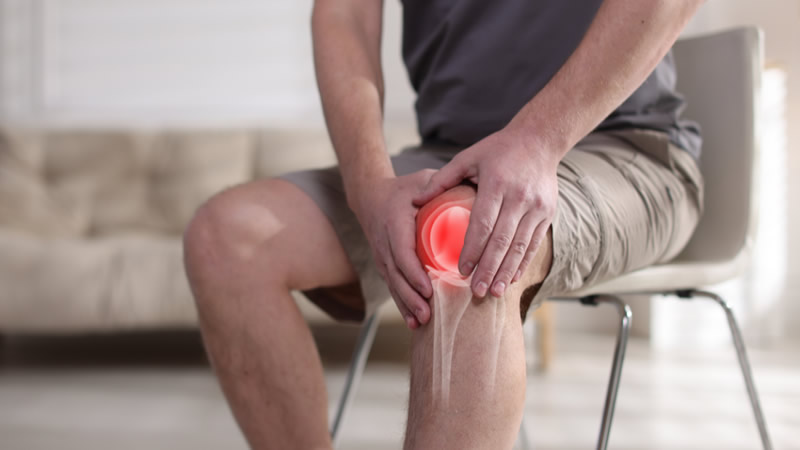
Hip or knee pain can slowly start changing the way you live, but it doesn't have to with precision joint replacement.
Maybe stairs have become harder. Maybe walking through the grocery store takes more effort. Maybe you have stopped doing the activities you used to enjoy because you are worried about pain, stiffness, or how long it will take to recover afterward.
For many patients, joint replacement feels like a big step. It can bring up a lot of questions:
- Am I too young?
- Will recovery take forever?
- Does the robot actually do the surgery?
- Will I be able to get back to golf, swimming, or pickleball?
- How do I know if surgery is really the right next step?
To help answer some of these common questions, we asked Dr. Khalid Waliullah, a hip and knee replacement specialist at Columbia Orthopaedic Group, to share what patients should know about modern joint replacement.
His message is simple: today's joint replacement is not one-size-fits-all. It is more personalized, more precise, and focused on helping each patient get back to the life they want to live.
As Dr. Waliullah explains, "Precision plus personalization provides a better outcome for each unique patient."
Precision Joint Replacement Myths
Myth: "I'm Too Young for Joint Replacement"
One of the most common concerns patients have is whether they are too young for joint replacement.
In the past, joint replacement was often thought of as a surgery for much older adults. But that has changed as surgical techniques, implant materials, and recovery processes have improved.
Dr. Waliullah explains that joint replacement "was the surgery that was initially designed for people in their 80s," but as technology and implants have improved, so has it's availability for a younger cohort or people.
That does not mean every younger patient with joint pain needs surgery. But age alone should not be the only deciding factor.
What matters more is how much your pain is affecting your life. If hip or knee pain is keeping you from working, sleeping, walking, exercising, or enjoying time with your family, it may be time to get evaluated.
As Dr. Waliullah puts it, "Staying active matters more," and in some cases, patients in their 50s or even younger may be appropriate candidates.
Myth: "Recovery Takes Forever"
Many patients delay talking to a surgeon because they are afraid recovery will take months and months before they can do anything normal again.
Recovery does take commitment, but it may not look like what people imagine.
For hip replacement, many patients are walking the day of surgery and may go home the same day, depending on their overall health and home support.
Dr. Waliullah notes, "Everybody is walking on the day of surgery. Most patients go home the same day, depending on their overall health and their home situation."
Knee replacement recovery can take longer and usually requires more physical therapy, but patients are often making steady progress within the first couple of months.
A general expectation:
- Hip replacement often has a faster early recovery.
- Knee replacement usually takes more time, therapy, and patience.
- Many knee replacement patients are driving within four to six weeks.
- Recovery continues improving over several months.
The key is having realistic expectations. You do not need to be fully healed in the first few weeks to be on the right track.
What Does Knee Replacement Recovery Usually Look Like?
Knee replacement recovery is often more gradual than hip replacement recovery.
In the first week, Dr. Waliullah typically wants patients to walk and do exercises at home, but not to aggressively force the knee.
He explains, "For the first week at home, we just want patients walking." He also adds, "Nobody needs to be forcing it," when referring to pushing the knee too hard in either direction right away.
Physical therapy often begins around 7 to 10 days after surgery. Many patients continue therapy for four to eight weeks, depending on their progress and how stiff the knee was before surgery.
Dr. Waliullah gives patients a helpful expectation for the first few visits:
"At your first visit, 3 to 4 weeks out from surgery, most patients tell me, 'Boy, I don't know that I'm feeling any better.'"
That can be normal.
By the second visit, around six to eight weeks, many patients start to feel more confident.
"That's when patients really say, 'Okay, I'm glad I did this. I'm better than I was," Dr. Waliullah says.
For many patients, the biggest improvements continue over three months to a year.
What Does Hip Replacement Recovery Usually Look Like?
Hip replacement recovery is often faster than patients expect.
For office work or desk-based work, some patients may return fairly quickly, especially if they work remotely. Dr. Waliullah says, "If you work remotely, I think within a week is probably reasonable."
For patients who need to visit an office in person, two to three weeks may be more realistic.
"We want to make sure that your incision is healed," he explains.
By the first follow-up visit, many hip replacement patients are already noticing a major improvement.
"With hip replacement, at the first visit, which is 3 to 4 weeks out, most patients say, 'I'm substantially better than I was,'" Dr. Waliullah says.
That does not mean healing is finished. But many patients can tell early on that they are moving in the right direction.
Myth: "All Joint Replacements Are the Same"
Another common misconception is that joint replacement is basically the same no matter where you go.
That is not true.
"Every surgery is different," Dr. Waliullah says. "The approach, the technology, the type of replacement that they're using, all these things affect your outcome."
That is why a personalized plan matters.
Your surgeon should consider your anatomy, imaging, activity level, bone quality, health history, and goals. A patient who wants to return to golf or pickleball may have different needs than someone whose primary goal is to walk through the grocery store without pain.
The best plan is not just about replacing the joint. It is about helping the new joint work well for your life.
Myth: "Joint Replacement Should Always Be the Last Resort"
Most patients should try conservative treatment before surgery, when appropriate. That may include physical therapy, medication, injections, activity changes, or other non-surgical options.
But surgery is not a failure.
Dr. Waliullah explains that many patients have already tried conservative treatment by the time they come in, or their joint problem has progressed to the point where non-surgical options are unlikely to work well.
"If we do end up having to have surgery, it's an option that's proven to be highly effective," he says. "It's not a failure if you end up having surgery. It's just another tool we have."
That is an important mindset shift. The goal is not to avoid surgery at all costs. The goal is to choose the right treatment at the right time.
Myth: "The Robot Does the Surgery"
Robotic-assisted knee replacement can sound intimidating if you do not know what it actually means.
The robot does not perform the surgery by itself. The surgeon is still in control.
Robotic-assisted technology gives the surgeon more information during the procedure. It can help with planning, alignment, spacing, and balance, but it does not replace the surgeon's judgment or experience.
A simple way to think about it: the technology helps guide the process, but the surgeon is still making the decisions.
Can I Go Back to Sports After Joint Replacement?
Many patients want to know whether they can get back to the activities they enjoy.
In many cases, yes.
Dr. Waliullah says patients often return to activities such as "golf, swimming, pickleball, cycling, those sorts of things" once they are healed.
Higher-impact activities, such as running or skiing, require a more personalized conversation. Some patients do return to those activities, but it depends on their overall health, the joint involved, their strength, balance, and risk tolerance.
The goal is not just to get through surgery. The goal is to help you return to a better quality of life.
Do I Have to Be Put Completely to Sleep?
Not always.
Many joint replacement procedures can be done with spinal anesthesia, which numbs the lower part of the body. Patients may still receive medication to help them relax, but they may not need full general anesthesia.
Dr. Waliullah explains, "Most of these we do with the spinal, which is similar to having an epidural."
He also notes that this can help limit nausea and pain after surgery.
Your care team will review your health history and determine what anesthesia plan is safest for you.
When Can I Drive Again?
Driving depends on which joint was replaced, which side was treated, whether you are still taking pain medication, and whether you can safely react behind the wheel.
Dr. Waliullah says he wants patients to be able to "stomp on the ground without pain" and be off pain medicine before driving.
In general, he says this may be around:
- Two to four weeks for hips
- Four to six weeks for knees
Your surgeon will give you specific guidance based on your surgery and recovery.
Can Both Knees Be Replaced at the Same Time?
In some cases, yes. But it is not the right choice for everyone.
Dr. Waliullah explains that while both knees can be replaced at the same time, many surgeons have moved away from doing that frequently because recovery can be much harder.
"It's harder, because you just don't have a good leg to stand on," he says.
There can also be a slightly higher risk of blood clots because patients may have more difficulty getting around early in recovery.
For the right patient in the right health, it may still be an option. But for many people, staging the surgeries can make recovery safer and more manageable.
What If I Have Osteopenia or Poor Bone Quality?
Bone quality can affect the type of implant or technique used in joint replacement.
Some replacements are press-fit, meaning the implant is shaped to fit tightly into the bone. Over time, the body grows onto the implant.
Dr. Waliullah explains that press-fit replacements can work well, but if a patient has osteopenia, the bone may be softer or more brittle. In those cases, the surgeon may use cemented implants or specialized implant designs to improve stability.
Dr. Waliullah says cement can help because it "spreads into the osteopenic bone and takes up the spaces that can form when bone gets brittle."
The bottom line: your surgeon should look at your bone quality and choose the approach that is safest for you.
The Bottom Line: You Don't Have to Keep Guessing
Hip or knee pain can make your world feel smaller. But you do not have to keep guessing whether it is time to get help.
The first step is not necessarily surgery. The first step is clarity.
At Columbia Orthopaedic Group, patients can get a clear evaluation, understand their options, and talk through a care plan that fits their pain, lifestyle, goals, and recovery needs.
As Dr. Waliullah says, "Getting you back to life, to the things that you want to do, is what our goals are going to be as well."
Ready to Talk About Your Hip or Knee Pain?
If hip or knee pain is keeping you from walking, sleeping, working, or enjoying the activities you love, Columbia Orthopaedic Group can help you understand your next step.
Schedule an appointment to learn whether joint replacement or another treatment option may be right for you.